ARTHRITIS & MOBILITY CARE

Arthritis & Mobility Care
Don’t wait until your pet can barely move

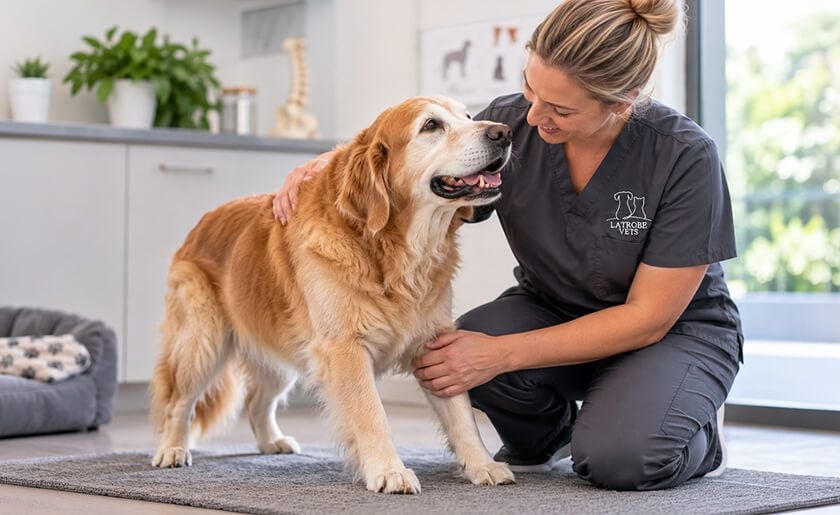
Arthritis and mobility problems are common, but that does not mean they should simply be accepted as part of getting older.

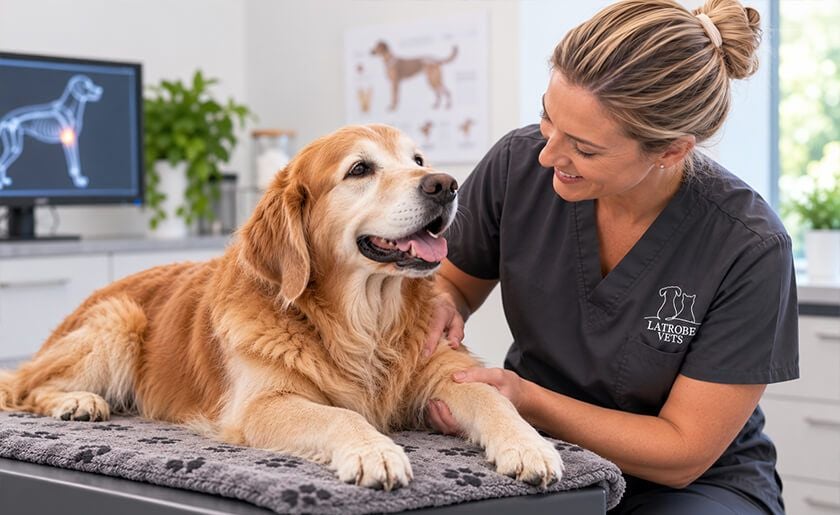
At Latrobe Vets, we take a proactive approach to mobility.

If your dog is starting to slow down, hesitates before jumping into the car, struggles getting up after resting or limps after exercise, those changes are worth investigating. The same applies to cats, where the signs can be much more subtle.

The earlier we recognise discomfort, the more options we usually have to help keep your pet moving comfortably and enjoying life.
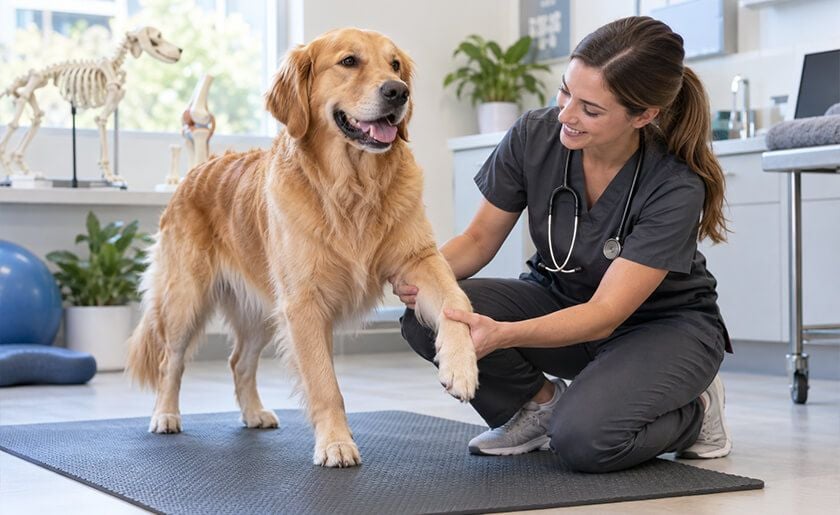
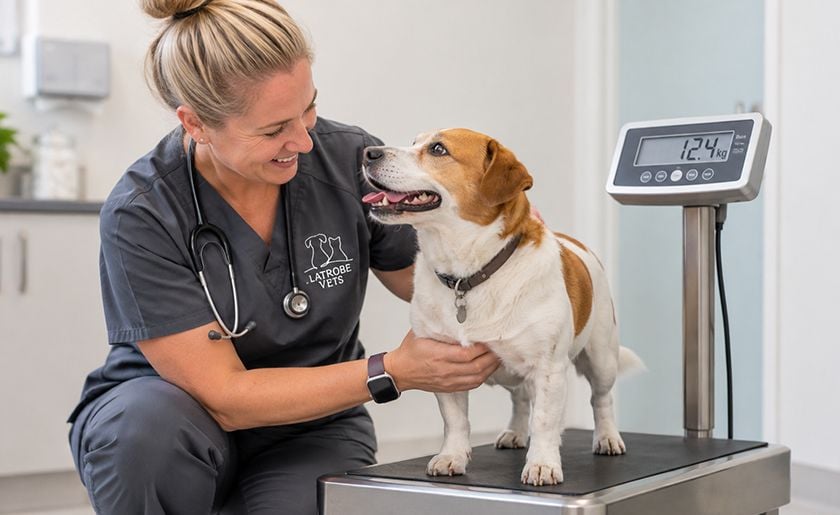
WHAT ARE THE EARLY SIGNS OF ARTHRITIS?

Arthritis does not always begin with obvious limping.

Some of the early signs can be easy to dismiss, particularly when they develop gradually.


Kristen made an important point during our discussion: pets generally do not limp for no reason. A limp usually tells us something is uncomfortable.

You may notice your pet:
Taking longer to get up
Slowing down on walks
Becoming reluctant to jump
Hesitating before using stairs
Limping or favouring one leg
Becoming less playful
Sleeping more
Avoiding slippery floors
Struggling to get into the car
Becoming less tolerant of being touched
Changing the way they sit, stand or move

CATS CAN HIDE MOBILITY PAIN VERY WELL

Cats are particularly good at hiding discomfort.

You may never see your cat limping.

Instead, the first sign of arthritis may be that they stop jumping onto the kitchen bench, no longer sleep in a favourite high spot or start using a chair as an extra step to reach somewhere they once jumped easily.

You may also notice:
  • Reduced grooming
  • Sleeping in different places
  • Reluctance to use stairs
  • Becoming less active
  • Difficulty getting into a high-sided litter tray
  • Irritability when handled
  • Reluctance to jump up or down

A useful rule is this:

If your cat used to do something comfortably and has stopped doing it, it is worth asking why.

ARTHRITIS IS NOT JUST AN OLD-PET PROBLEM

Arthritis Pet Problem
Although arthritis becomes more common as pets age, it can begin much earlier.

Previous injuries, joint problems, breed, body shape, activity levels and lifestyle can all influence when mobility issues develop.

Working dogs and very active dogs may also benefit from thinking about joint health before there are obvious signs of pain.

The aim is not to wait until your pet is severely arthritic.

We would rather start supporting their mobility while they are still active and comfortable.

THERE IS MORE TO ARTHRITIS CARE THAN MEDICATION

One of the biggest misconceptions about arthritis is that treatment automatically means putting your pet on pain medication for the rest of their life.

Medication can certainly be an important part of treatment, but arthritis management is often much broader.

Depending on your pet, we may discuss:
  • Weight management
  • Nutritional supplements
  • Joint-support products
  • Appropriate exercise
  • Changes around the home
  • Pain relief
  • Arthritis injections
  • Mobility support
  • Changes to activity
  • Monitoring how your pet responds over time

For some pets, relatively simple changes can make a noticeable difference.
For others, a combination of treatments may be needed to keep them comfortable.

The important thing is that the plan suits your pet.
Pet Weight Management

Weight Can Make a Big Difference

Even a small amount of excess weight can place additional strain on sore joints.

That does not mean an arthritic pet should suddenly be put on a strict diet or stopped from exercising.

It means we look at the whole picture.

Your vet can help assess your pet’s body condition, discuss an appropriate target weight and recommend a feeding and exercise plan that supports their mobility without making them uncomfortable.

Keeping your pet lean can be one of the most effective long-term ways to reduce stress on their joints.

Pet Exercise

Exercise is Still Important

Pets with arthritis generally still benefit from movement.

The goal is usually not to stop exercise, but to make it more appropriate and consistent.

Shorter, regular walks may suit some dogs better than one very long walk followed by several inactive days.

Swimming, controlled exercise and lower-impact activity can also be useful for some patients.

The right amount depends on your pet’s age, condition, fitness and degree of discomfort.

Making Home Life Easier

Making Home Life Easier

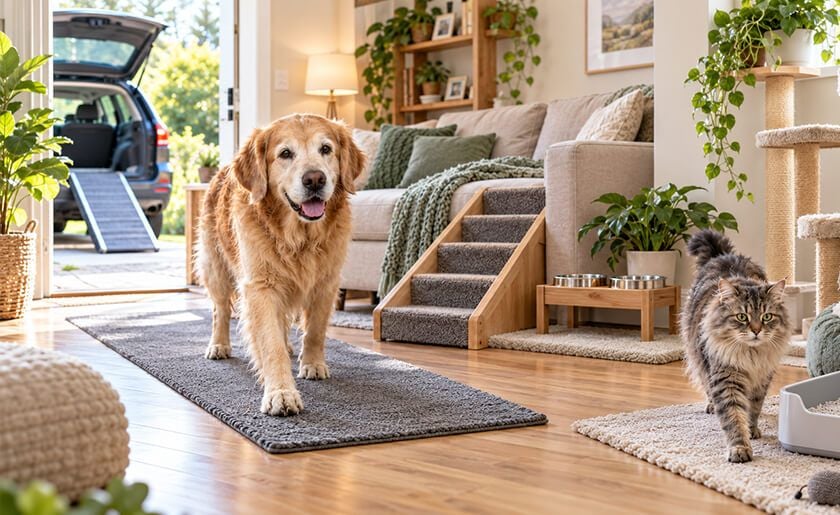
Small environmental changes can also help an arthritic pet move more comfortably.

These may include:

  • Non-slip mats on slippery floors
  • Ramps or steps to reach favourite places
  • Supportive bedding
  • Raised food bowls where appropriate
  • Easier access to the car
  • Lower-sided litter trays for cats
  • Keeping food, water and sleeping areas easy to reach
 

These changes may sound simple, but they can make everyday movement much easier.

Pet Monitoring

Ongoing Monitoring Matters

Arthritis is usually a long-term condition, which means management may need to change over time.

What works well today may need adjusting six months or a year from now.

Regular check-ins allow us to assess:

  • Mobility
  • Pain levels
  • Weight
  • Muscle condition
  • Response to treatment
  • Any medication side effects
  • Whether the current plan is still working

This is especially important because pets can gradually adapt to discomfort, making it difficult to notice how much they have changed.

FREQUENTLY ASKED QUESTIONS

KEEP THEM MOVING COMFORTABLY FOR LONGER

Arthritis care is not about waiting until your pet can no longer do the things they love.

It is about noticing the changes early, understanding what is causing them and putting the right support in place before discomfort becomes more severe.

If your dog or cat is slowing down, limping, reluctant to jump or simply moving differently, talk to our team.

The earlier we look, the more we may be able to do to help keep them comfortable and active.

Visit Us at

Traralgon Clinic

Monday to Friday: 8am to 6pm
Saturday: 8am to 3pm
Sunday: 9am to 12pm

Visit Us at

Morwell Clinic

Tuesday: 8am to 6pm
Wednesday: 8am to 6pm
Thursday: 8am to 6pm

Helping pets feel better, and owners feel supported

Independently owned veterinary care for cats, dogs, birds and small pets across the Latrobe Valley.

Follow Us

Proudly Independent