IN-HOUSE DIAGNOSTICS

In-house Diagnostics
Faster answers can lead to better decisions

At Latrobe Vets, we have invested heavily in in-house diagnostic equipment so we can investigate many common and urgent health concerns without always needing to send samples away and wait for results.

That can mean getting important information within hours, sometimes much sooner, and being able to make treatment decisions faster.

The value is not just in having advanced equipment. It is in being able to use that information to recognise when a patient may be sicker than they first appear, decide what needs to happen next and, where necessary, arrange referral sooner.
WHAT DIAGNOSTIC TESTING CAN WE PERFORM IN-HOUSE?


Depending on what is happening with your pet, your vet may recommend one test or combine several different types of information to help build a clearer picture.

Our clinic has a broad range of diagnostic capabilities, including:
Comprehensive blood testing
Blood gas analysis
Urinalysis
Blood pressure monitoring
Ultrasound
Digital diagnostic equipment
Point-of-care testing
Additional testing for critically unwell patients

IN-HOUSE BLOOD TESTING

Blood tests can tell us a great deal about what is happening inside the body, including information that cannot always be identified during a physical examination alone.

Depending on the tests performed, blood work can help us assess areas such as:
  • Red and white blood cells
  • Kidney function
  • Liver function
  • Blood sugar levels
  • Hydration
  • Electrolytes
  • Signs of infection or inflammation
  • Other indicators of organ function and general health

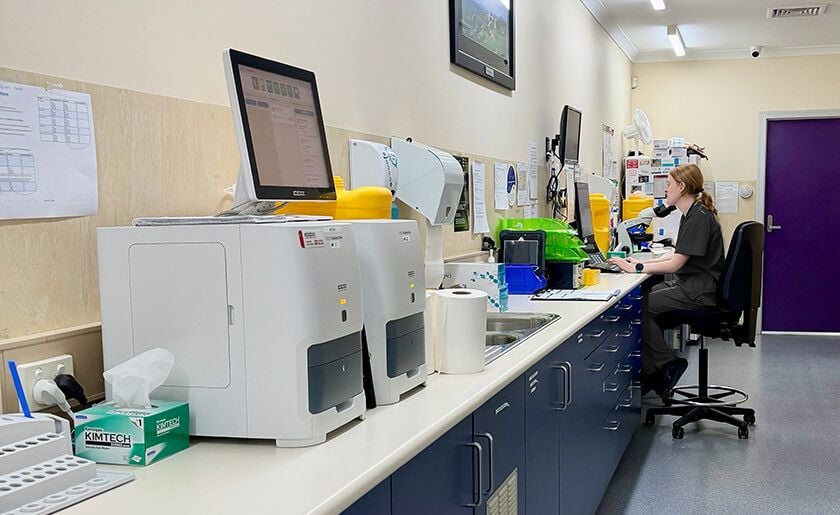
One of the major advantages of having comprehensive blood machines within the clinic is speed.

As Madeline explained in the meeting, clients are sometimes surprised when she tells them she can call back with blood results that same day. In many cases, the testing can be performed while your pet is still with us.

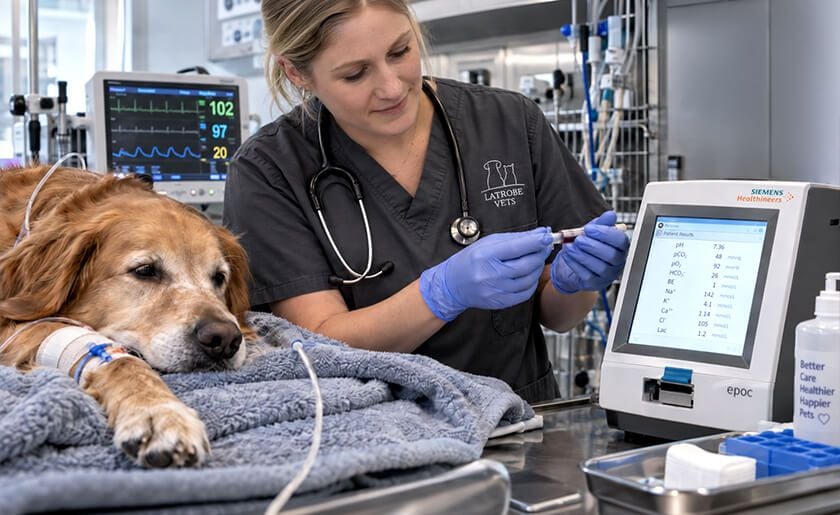
Blood Gas Analysis for Critically Unwell Patients

Blood Gas Analysis for Critically Unwell Patients

A blood gas machine gives us additional information that can be particularly useful when a pet is seriously ill.

It can help assess important factors such as oxygenation, acid-base balance and electrolytes, giving the veterinary team another layer of information when making decisions about a critical patient.

This is not something every general veterinary practice has access to, but for the types of cases seen in the Latrobe Valley, it can be extremely valuable.

The team regularly sees urgent conditions such as snake bites, rat bait ingestion and seriously unwell animals where being able to gather information quickly can help guide the next step.

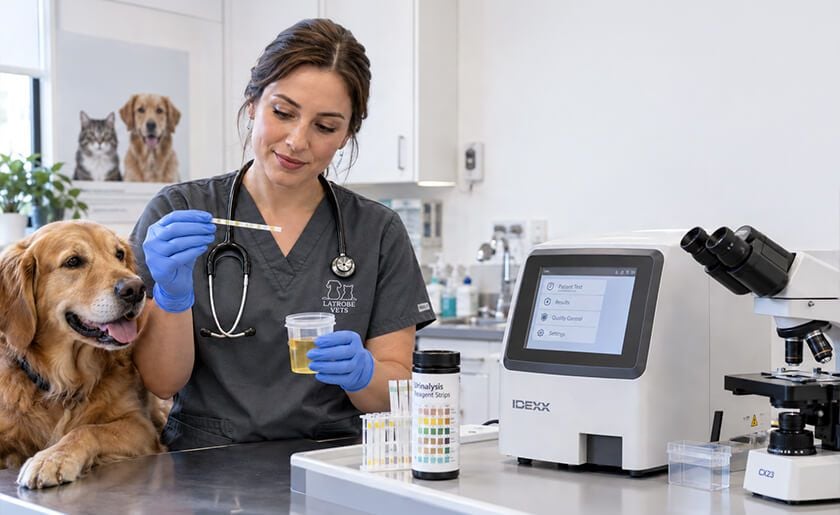
Urinalysis

Urinalysis

Urine testing can provide important clues about several different body systems.

Depending on the situation, it may help us investigate:

  • Urinary tract problems
  • Kidney function
  • Diabetes
  • Hydration
  • Infection
  • Urine concentration
  • Other metabolic changes
 

Our digital urinalysis equipment allows us to assess many samples in-house and combine those results with blood tests and your pet's clinical examination.

Sometimes one result provides the answer. More often, diagnostics work like pieces of a puzzle, with each test adding a little more information.

Blood Pressure Monitoring

Blood Pressure Monitoring

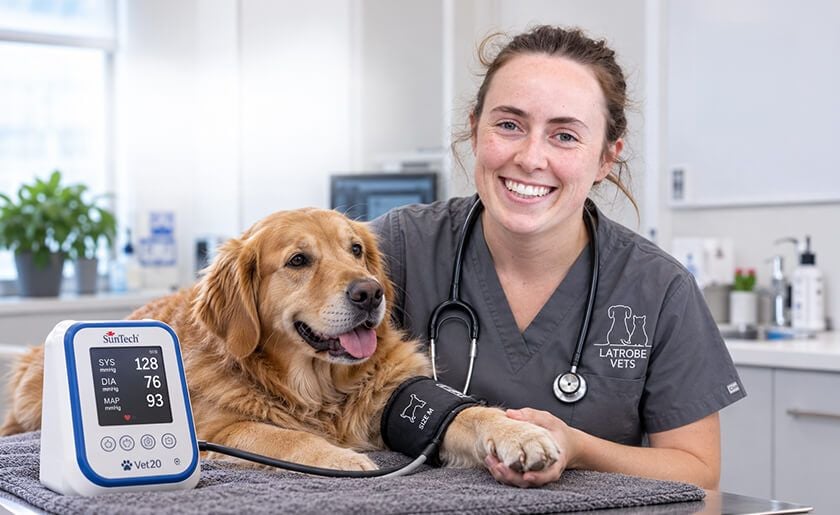
Blood pressure is another measurement that can help us understand how a patient is coping.

We have multiple options available for checking blood pressure, and monitoring may be recommended for pets with certain medical conditions, critically ill patients, senior animals or those undergoing anaesthesia.

Changes in blood pressure can be important because they are not something an owner can see at home.

Knowing what is happening allows us to respond rather than guess.

Ultrasound

Ultrasound

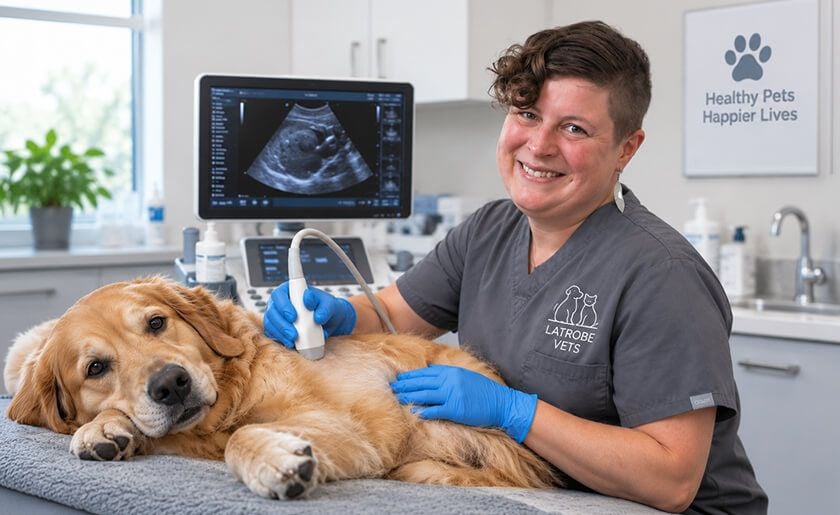
Ultrasound allows us to examine structures inside the body in real time.

It can be particularly useful when investigating abdominal problems and may help us assess organs, fluid accumulation and some causes of acute illness.

The team also has experience using focused emergency ultrasound to look for obvious abnormalities in unwell patients.

This can be especially helpful when an animal arrives with vague signs such as collapse, abdominal pain, vomiting or sudden deterioration and we need to begin narrowing down what may be happening.

WHY HAVING DIAGNOSTICS IN-HOUSE MATTERS

The same types of illnesses can present at any veterinary clinic.

The difference can be how quickly those problems are recognised.

That was one of the strongest points Kristen made during our discussion.

Her background in emergency and critical care has placed a strong emphasis on recognising the patient who may be more unwell than they initially appear and teaching the whole team what signs to look for.

Having diagnostic tools available within the clinic supports that approach.

It means we can often:
  • Investigate sooner
  • Identify important red flags
  • Make treatment decisions based on more information
  • Monitor changes more closely
  • Determine whether a patient is safe to manage locally
  • Recognise when referral is needed

The goal is not to test for the sake of testing.

It is to have the information we need to make better clinical decisions.

GETTING ANSWERS WHEN TIME MATTERS

Some conditions can change quickly.

A pet that has eaten rat bait, been bitten by a snake, collapsed unexpectedly or become seriously unwell may need decisions made much faster than a routine patient.

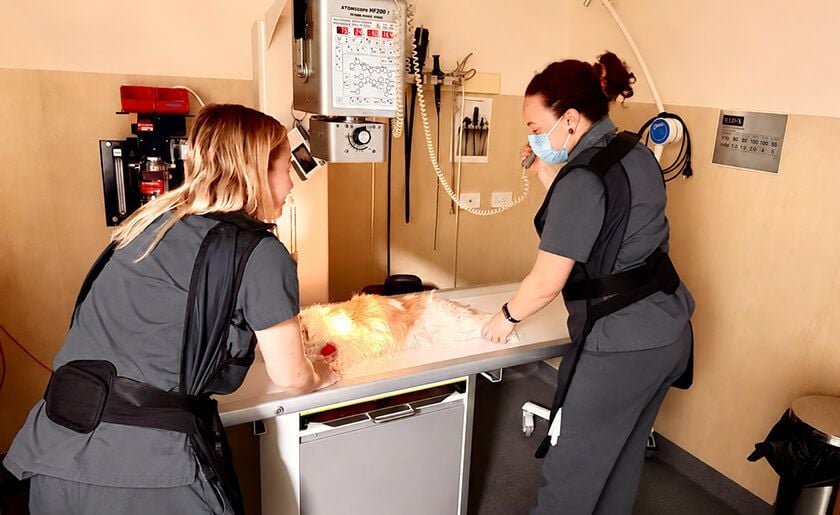
In these situations, access to in-house blood testing, blood gas analysis, ultrasound, blood pressure monitoring and other point-of-care tests can help us understand the severity of the problem and begin treatment sooner.

Just as importantly, diagnostics can help us recognise when your pet needs a level of care beyond what a general practice can safely provide.

If referral is the best option, having already gathered useful information can also help the next veterinary team understand what has been happening.

DIAGNOSTICS ARE ONLY USEFUL IF WE KNOW WHAT TO LOOK FOR

Diagnostic Equipment Supports
Technology is valuable, but it does not replace clinical judgement.

Our diagnostic equipment supports the physical examination, the history you give us and the experience of our veterinary team.

Kristen's extensive background in emergency and critical-care medicine has also helped shape the clinic's approach to recognising subtle signs of deterioration and using diagnostics to investigate patients more thoroughly.

That knowledge is shared throughout the team through ongoing teaching and training.

It is part of a wider philosophy at Latrobe Vets: look closely, ask more questions and avoid assuming that everything is fine simply because the problem is not immediately obvious.

FREQUENTLY ASKED QUESTIONS

BETTER INFORMATION, SOONER

When your pet is unwell, waiting for answers can be difficult.

Having a broad range of diagnostic tools within the clinic allows us to investigate many problems quickly, monitor patients closely and make more informed decisions about what should happen next.

Sometimes that means starting treatment sooner.

Sometimes it means reassuring you that things look better than feared.

And sometimes it means recognising quickly that your pet needs more advanced care elsewhere.

Whatever the outcome, our goal is the same: to understand as much as we can, as early as we can, so we can make the best decisions for your pet.
Visit Us at

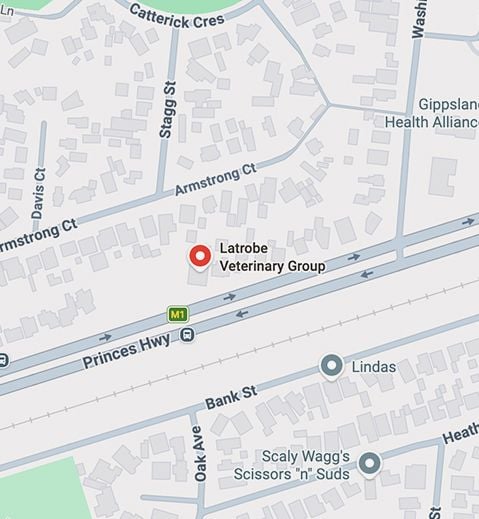
Traralgon Clinic

Monday to Friday: 8am to 6pm
Saturday: 8am to 3pm
Sunday: 9am to 12pm

Visit Us at

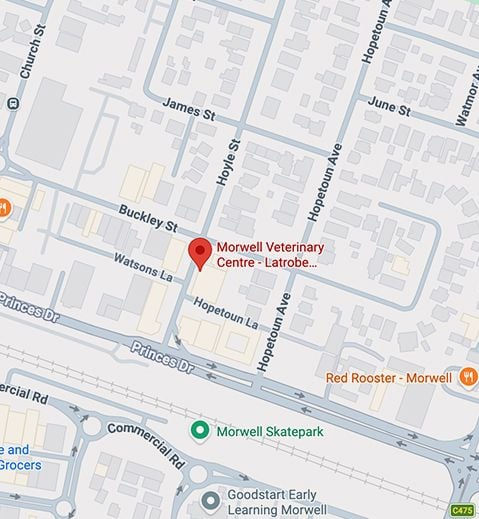
Morwell Clinic

Tuesday: 8am to 6pm
Wednesday: 8am to 6pm
Thursday: 8am to 6pm

Helping pets feel better, and owners feel supported

Independently owned veterinary care for cats, dogs, birds and small pets across the Latrobe Valley.

Follow Us

Proudly Independent