&geometry(260x103) "Latrobe Vets")
URGENT & EMERGENCY VETERINARY CARE
Is your pet unwell or injured? Call us now.
If you are worried your pet may need urgent veterinary care, please phone us first where possible.
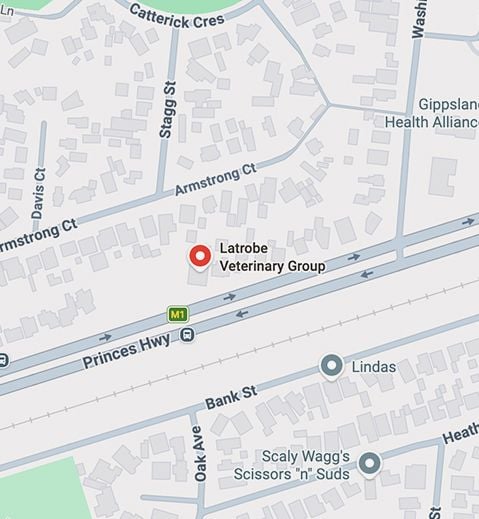
Traralgon Clinic
Phone: (03) 5174 6999
180 Princes Highway, Traralgon VIC 3844
180 Princes Highway, Traralgon VIC 3844
Hours: Monday to Friday: 8:00 am to 6:00 pm
Saturday: 8:00 am to 3:00 pm
Sunday: 9:00 am to 12:00 pm
Saturday: 8:00 am to 3:00 pm
Sunday: 9:00 am to 12:00 pm
Calling ahead allows our trained team to assess what is happening, give you immediate advice and prepare for your pet’s arrival if urgent treatment is needed.
If your pet is struggling to breathe, has collapsed, suffered significant trauma or appears critically unwell, seek veterinary attention immediately.
Latrobe Vets is not a 24-hour emergency hospital. If your pet needs continuous overnight or specialist critical care, we will help arrange referral to the appropriate emergency facility.
WHAT HAPPENS WHEN YOU CALL?
Our team has been trained to triage urgent cases from the first phone call.
We will ask a few focused questions about what has happened and how your pet is behaving.Certain warning signs tell us very quickly that a pet should be seen immediately.
Depending on what you tell us, we may advise you to:Come straight to the clinic
Book an urgent appointment that day
Monitor your pet with specific instructions
Go directly to a 24-hour or specialist emergency hospital
If we know you are coming with a critically unwell pet, we can also begin preparing before you arrive.
WHEN YOU ARRIVE
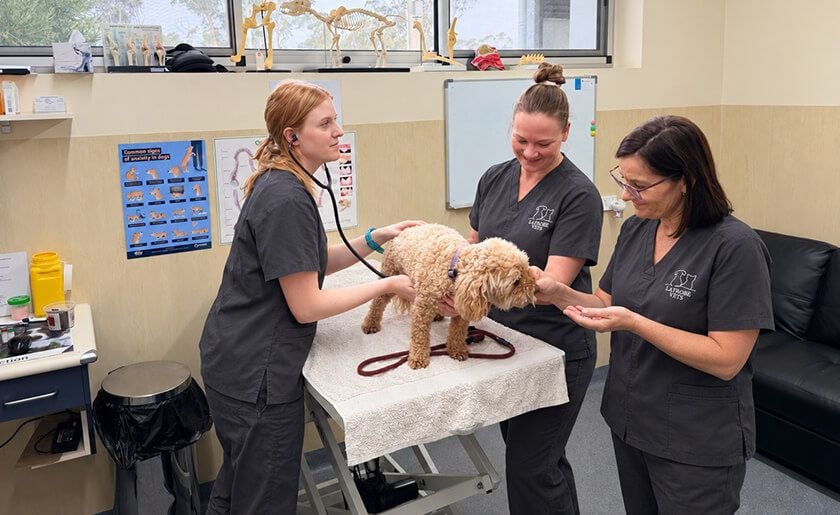
Your pet will be triaged again by one of our trained veterinary nurses.
If there are signs that your pet may be unstable, a veterinarian will be alerted and assessment or treatment can begin immediately.
This means the order patients are seen in may sometimes change according to medical urgency rather than arrival time.
The priority is always recognising which patient needs help first.
EXTENSIVE EMERGENCY AND CRITICAL-CARE EXPERIENCE
Emergency medicine is a significant area of strength at Latrobe Vets.
Dr Kristen Hennessy brings more than a decade of extensive emergency and critical-care experience from major veterinary and referral hospitals in the United States.
Her emergency career began with a demanding 13-month internship at one of America's major veterinary hospitals, followed by approximately 12 years working in emergency and critical-care medicine within a large referral hospital environment. She also served as Medical Director of one of its satellite hospitals.
Importantly, that experience doesn't sit with one vet.
Kristen has brought emergency triage systems, critical-patient recognition and advanced clinical thinking into the practice and continually trains our vets and nurses to recognise when a patient is not quite right.
That means our team is trained to look beyond the obvious symptoms.
A pet may arrive because they are vomiting, not eating or simply seem unusually quiet. Our job is to determine whether this is a straightforward illness or whether there are subtle signs suggesting something more serious is developing.
Our goal is never to keep a case simply because we can.
It is to make sure your pet gets the right care, in the right place, at the right time.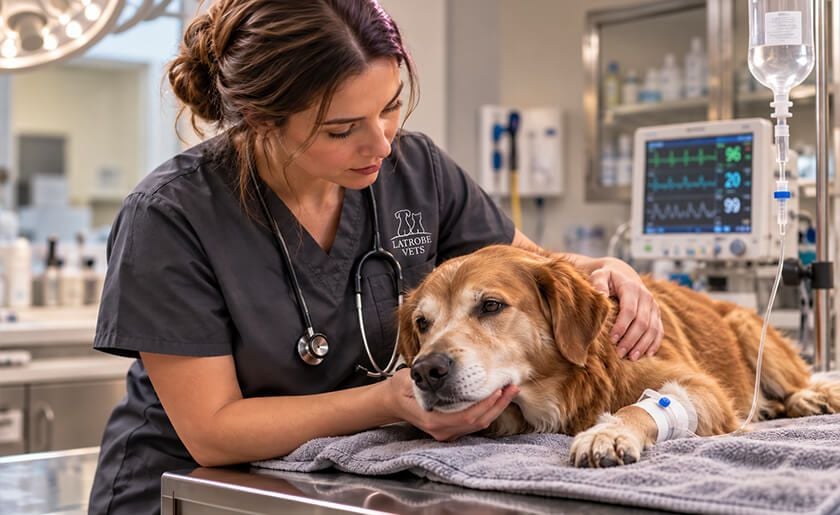
Recognising The Sick Patient Early
One of the most important skills in emergency medicine is recognising when a patient is sicker than they first appear.
A pet does not always arrive dramatically collapsed.
Early warning signs can be subtle.
Changes in circulation, blood pressure, breathing, hydration, behaviour or responsiveness can provide important clues about what is happening internally.
This is an area our team has invested heavily in, both through training and through the diagnostic equipment available within the clinic.
Our philosophy is simple:
Look carefully. Recognise the red flags. Get the information we need. Act quickly when it matters.
In-House Diagnostics When Minutes Matter
When a patient is seriously unwell, waiting days for results is not always an option.
Our in-house diagnostic capabilities include:
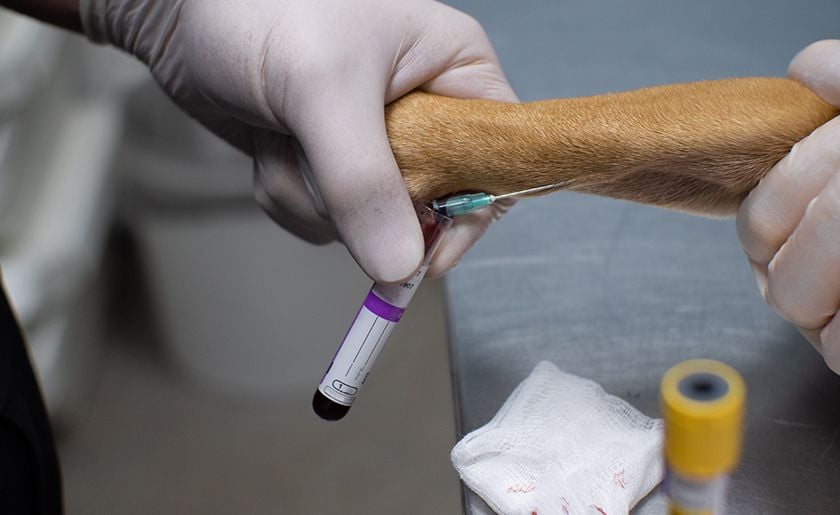
- Comprehensive blood testing
- Blood gas analysis
- Blood pressure monitoring
- Ultrasound
- Digital urinalysis
- Point-of-care testing
- Advanced patient monitoring
These tools can help us get important information quickly and make better-informed decisions about treatment, stabilisation or referral.
Our blood gas analyser, for example, provides valuable additional information for critically unwell patients. Ultrasound can help us rapidly assess for internal abnormalities or fluid, while in-house blood testing can identify changes that may not be apparent from examination alone.
It is not simply about having technology.
It is knowing what to look for and how to use the information.
COMMON URGENT CASES WE SEE
Please call us if you are concerned about symptoms or situations including:
- Repeated vomiting or diarrhoea
- Not eating or drinking
- Collapse or sudden weakness
- Difficulty breathing
- Snake bites
- Rat bait ingestion
- Suspected poisoning or toxin exposure
- Hit-by-car or other traumatic accidents
- Wounds or significant bleeding
- Sudden severe pain
- Possible foreign-body ingestion
- Sudden deterioration of an existing condition
If you are unsure whether something is an emergency, call.
We would rather help you determine the level of urgency than have you waiting at home wondering.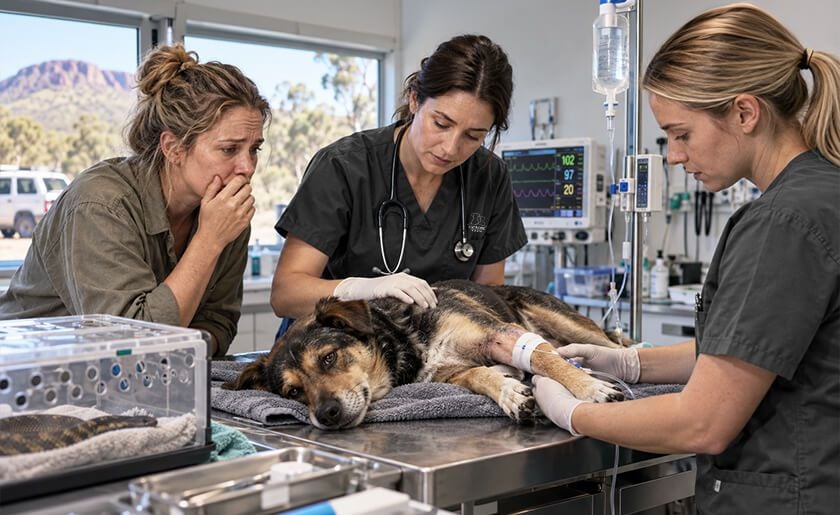
SNAKE BITE? CALL IMMEDIATELY.
Snake bites are an important local emergency and something our team regularly encounters.
If you think your pet may have been bitten:
- Keep your pet as calm and still as possible
- Call us immediately and alert us to your estimated arrival time
- Arrange transport to the clinic
- Do not try to catch or kill the snake
- Do not bring the snake with you
You do not need to identify the snake before seeking veterinary treatment.
HAS YOUR PET EATEN RAT BAIT OR ANOTHER TOXIN?
Do not wait for symptoms to appear.
Do not wait for symptoms to appear.
Call us as soon as you know or suspect your pet has eaten rat bait, medication, chemicals or another potentially toxic substance.
If possible, bring the packaging with you or take a clear photo of the product and ingredients.
Knowing what your pet may have eaten can help us determine the most appropriate treatment.STABILISATION AND REFERRAL WHEN YOUR PET NEEDS MORE
Latrobe Vets has a high level of urgent and emergency capability for a general veterinary practice, but we are not a 24-hour emergency or specialist hospital.
Some patients need continuous overnight monitoring, specialist surgery or intensive care beyond what can safely be provided within general practice.
Knowing when that point has been reached is part of good emergency medicine.
Where appropriate, we can:
- Assess your pet
- Begin stabilisation
- Perform urgent diagnostic testing
- Start initial treatment
- Determine the level of care required
- Communicate our findings to the referral team
- Help organise transfer for ongoing care
Our goal is never to keep a case simply because we can.
It is to make sure your pet gets the right care, in the right place, at the right time.